



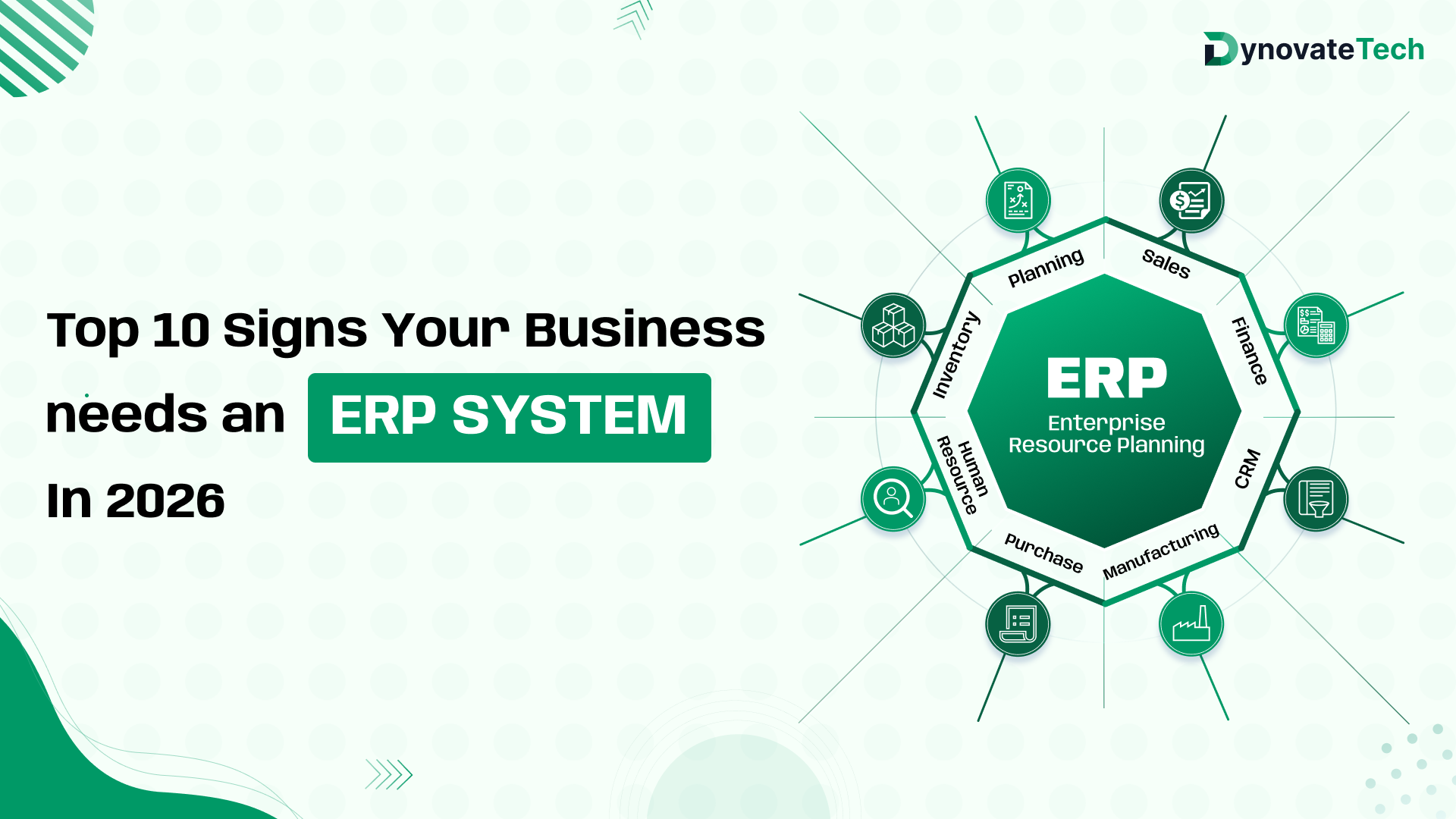
As your business grows, you’ll often find yourself juggling spreadsheets, disconnected software and manual processes that consume hours each week. If this sounds familiar, then it may be time to consider an Enterprise Resource Planning (ERP) system. 10 Indicators Your Business Requires an ERP System 2026.
1. You’re Drowning in Spreadsheets
When your finance, sales and inventory data all live in separate Excel files that need to be manually updated and cross-checked by someone, errors are inevitable. An ERP system consolidates all of this information into one accurate, real-time source of truth.
2. Your Teams Are Using Disconnected Software
Sales has one tool, accounting another, and inventory is somewhere else altogether. If your apps can’t talk to each other, you’ll end up with duplicated, delayed or lost data. An ERP puts these functions together on one platform.
3. Reporting Takes Minutes, Not Days
If you have to go to five different places to get the data and then manually put it together to make a simple sales or inventory report, your business is wasting precious time. Modern ERP systems offer real-time dashboards and instant reporting.
4. Your inventory accuracy is off
If you find yourself constantly running out of stock or overstocking or doing manual recounts all the time, it’s time to look at your inventory management. Real-time visibility of stock across warehouses and locations with ERP systems.
5. Slow or Error-Prone Order Processing
Manual order entry results in mistakes, delays and unhappy customers. An ERP will automate the order-to-cash cycle, reducing errors and speeding up fulfilment.
6. Scaling seems impossible
Your existing systems are not designed to scale if you need to build your processes from scratch to launch a new product line, location or business unit. ERP platforms are meant to grow with your business.
7. Audits and Compliance Are Painful
Having to chase down documents and reconcile records for every audit or compliance check is a big red flag. ERP systems automatically keep orderly, auditable records.
8. You have no real-time visibility into the business
Decision-making is hampered when leadership has to wait on multiple departments for an accurate, real-time picture of finances, sales or operations. ERP dashboards give you that visibility in an instant.
9. Customer Experience Variability
When customer data isn’t shared across sales, support and delivery teams, it impacts the quality of service. ERP systems connect customer-facing teams so they are all working from the same information.
10. Growth hampered by handwork
If your team spends more time on data entry and reconciliation than strategic work, then you know your processes need automation. ERP systems free your people to focus on more valuable work.
Concluding Remarks
If you are facing two or more of these problems, it is an indication that your business has outgrown the existing systems. 2026 is the year to upgrade to the right ERP solution to streamline operations, improve data accuracy, boost productivity and support long-term business growth.
Unsure what the right ERP solution for your business is? Get in touch with ERP implementation experts at Concetto Labs. Our team will evaluate your business needs and suggest the best solution to help you scale with confidence.


 India
India
 United Kingdom
 UAE
UAE
 USA
USA
 Ghana
Ghana